Floods are the most frequent natural disaster worldwide and have profound impacts on societies, economies, and ecosystems. Despite significant advances in scientific understanding and the development of early warning systems, flood risks continue to rise as a result of climate change, rapid urbanization, land-use changes, and deforestation. Addressing these complex and interconnected challenges requires not only improved forecasting but also more holistic and forward-looking management approaches.
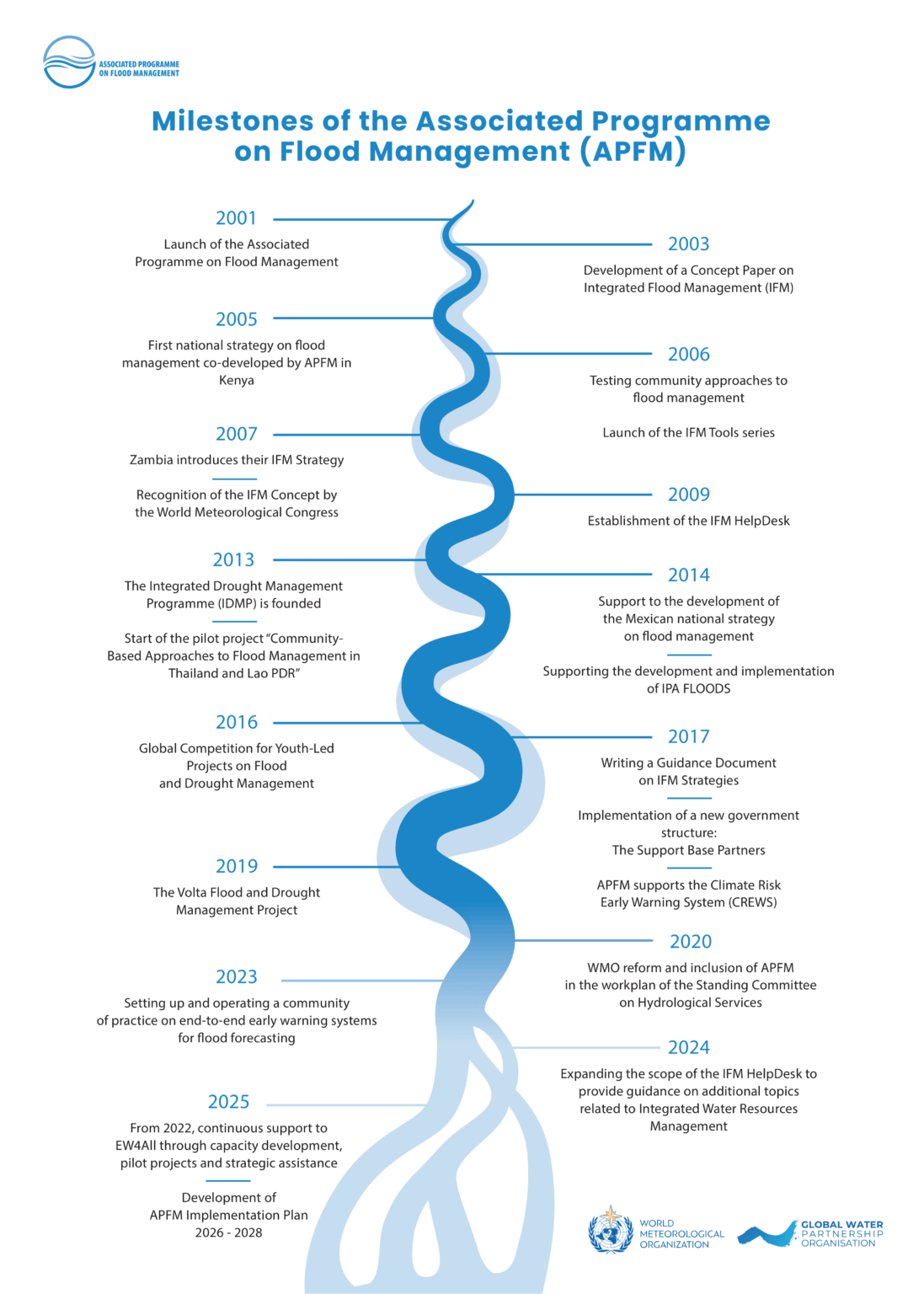
The Associated Programme on Flood Management (APFM), a joint initiative of the World Meteorological Organization and the Global Water Partnership, was established in 2001 to support countries and communities in developing sustainable, risk-based flood management strategies. Through technical guidance, capacity development, policy support, and a global platform for knowledge exchange, APFM helps translate science into practice and strengthens institutional frameworks for flood management at national and regional levels. The programme also facilitates access to tools, case studies, and advisory services, and promotes cooperation among more than 30 partner organizations worldwide.
At the core of APFM’s work is the concept of Integrated Flood Management (IFM). IFM combines flood risk management with water resources management, land-use planning, ecosystem protection, and socio-economic development. It promotes a shift from a reactive, disaster-response approach to a proactive and preventive strategy that reduces vulnerability and builds resilience.
By moving beyond structural protection alone, IFM not only minimizes the risk of loss of life, damage to property, and environmental degradation, but also maximizes the multiple benefits that floods can provide when properly managed. These include groundwater recharge, improved soil fertility, wetland restoration, and enhanced biodiversity. Through integrated and adaptive solutions, IFM supports safer communities, more resilient economies, and healthier ecosystems.